Home › Patio ideas › Choosing patio flooring
Choosing The Best Patio Flooring
Which type of patio flooring to use is, I think, one of the most important decisions you will have to make if you are planning a new patio.
There are so many different types on the market today that it's not easy to decide which is best.
And it is an important decision because the type of surface you choose defines the character of your patio.
So, from natural stone to wooden decking, concrete pavers to bricks, I've taken a look at the different types and listed their advantages and disadvantages to help you make the right choice.
Natural Stone Patio Flooring
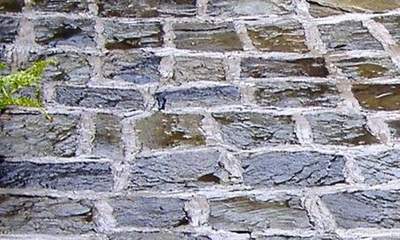
Natural stone is available in many forms and varieties, and, as a material, it is hard to beat for both beauty and durability, but it is very expensive. You can choose from large flagstones and paving stones, to the smaller setts and cobbles depending on the effect you want to achieve.
Setts are the small, chunky, paving stones, usually with a slightly curved upper surface that were once used for city roads. They are often made from granite and are extremely hardwearing.
Confusingly, setts are sometimes also called cobbles or cobblestones, although the term 'cobble' also refers to the smallish, naturally rounded pieces of stone that can be fitted together to make paths and other surfaces.
Both setts and cobbles can be also be used to create decorative insets for other types of patio flooring.
Advantages of Natural Stone
- There are many types ranging from slate to sandstone to granite so you are bound to find one that is just right for you.
- Each piece is truly unique and has its own beauty and character.
- Natural stone ages well and looks better and better as its patina develops over the years.
- It is very hardwearing and will last a lifetime.
- Once installed it needs no special treatment.
Disadvantages of Natural Stone
- It is very expensive and delivery and installation costs can be high.
- It is heavy to work with.
- Its weight means that you will need to prepare a solid foundation of hardcore and concrete.
- Some types, such as slate, can be extremely slippery when wet or icy.
- The presence of natural flaws and cracks in some types of stone can result in cracking and flaking over time.
Cost Saving Options
Buying directly from a quarry can be slightly cheaper that going to a dealer. It is also possible to source stone from reclamation yards which will save you money, although you may find that the pieces are different sizes and thicknesses making them harder to lay.
Broken and irregularly shapes pieces can usually be purchased more cheaply and these can be ideal for crazy paving.
Reconstituted Stone Patio Flooring
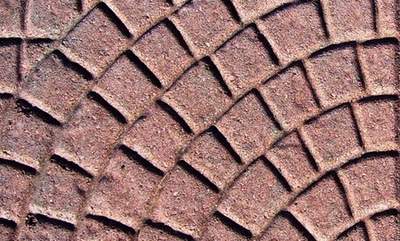
Reconstituted stone is a mixture of concrete and ground up natural stone cast into different shapes. Modern methods mean that it can be hard to tell the difference between top quality reconstituted stone and the real thing. It is available in a variety of forms from flag and paving stones to setts.
It is also possible to buy patio kits made from reconstituted stone. These are extremely convenient to use and allow you to create decorative patterns, such as circles, with ease.
Advantages of Reconstituted Stone
- Less expensive than real stone.
- Available in lots of different textures, colours, and sizes.
- Its regularity makes it more straightforward to lay than quarried stone.
- It has a uniform texture so is less prone to cracking and flaking.
- Long lasting.
Disadvantages of Reconstituted Stone
- The colours of cheaper types can fade rapidly.
- Reconstituted stone lacks the subtle beauty and natural variation of real stone and doesn't age as well.
Cost Saving Options
You may be able to pick some up your local reclamation yard or else look for 'end of lines' at your builders' merchant or wait for sales at the DIY store.
Brick Patio Flooring
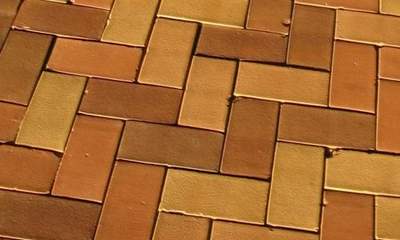
Clay bricks are ideal for the smaller patio or for creating part of the floor surface on a larger one. As they are made from a natural material they create a sympathetic surface which can blend in beautifully with both your house and garden.
They are available in many different colours and with either smooth or slightly textured finishes.
Take care to use exterior grade bricks as these are weather and frost resistant. You could also use engineering bricks which are extremely hard and durable although the smooth surfaces can become slippery.
Advantages of Brick
- Bricks create an attractive and sympathetic surface that is cheaper than stone.
- Available in a range of colours and finishes.
- Hardwearing - a well laid patio made from good quality bricks should last a lifetime.
- Their small size makes it easy to create a range of interesting patterns or 'bonds' such as herringbone and basketweave.
Disadvantages of Brick
- Their small size makes them time consuming to lay.
- Used over a large area they can look rather overwhelming.
- Poor quality bricks are prone to weather damage.
- Bricks with a smooth finish can become very slippery in wet or icy weather.
Cost Saving Options
You can pick up secondhand bricks for a very reasonable price from reclamation and demolition yards but it can be hard to assess their quality.
If you like the effect of a brick surface but can't afford the cost of the real thing, you could consider one of the pre-cast concrete pavers that replicate the look but at a lower price.
Clay and Concrete Patio Pavers
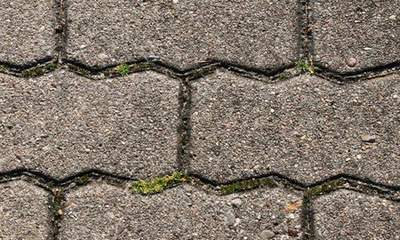
Clay and concrete pavers are a versatile choice for your patio flooring. They are available in a range of textures, sizes and shapes giving you a number of design options.
Clay pavers are usually produced in shades of red and can be used to create a very attractive and sympathetic patio surface.
Concrete pavers are usually found in shades of grey and buff, and, whilst they do not usually give such a warm and attractive finish, are a practical and hardwearing choice.
Some pavers are designed to replicate look of a brick surface laid in different patterns, such as herringbone or basketweave, but at a much more affordable price.
Advantages of Clay and Concrete Pavers
- Produced in a range of styles and sizes giving design flexibility.
- Allow you to replicate the look of more expensive surfaces such as brick or tile.
- Hardwearing.
- Moderately priced.
Disadvantages of Clay and Concrete Pavers
- Clay pavers must be weather resistant or else they will be prone to cracking.
- Concrete pavers can discolour unattractively over time unless they are cleaned regularly.
Cost Saving Options
Look for 'end of lines' at your builders' merchant or wait for sales at the DIY store.
Concrete Patio Flooring

A simple surface of concrete can provide a quick and cost effective solution if you are working to a limited budget. Although not the most attractive of patio flooring surfaces, it is functional and durable, provided you use the right concrete mix and lay it with care.
Using the wrong mix and not ensuring that you lay it evenly, tamping out any irregularities and gaps, can lead to unsightly cracking.
You can make your concrete patio more interesting by adding a surface texture to some or all of it. Try adding a thin layer of gravel before the concrete has fully set and pressing it gently into the surface, or create a brushed finish by using a broom on the surface before it is fully set. You can also buy tools (or use any suitable household objects) to create a stamped effect.
If you already have an old concrete patio and don't want to go to the expense of tearing it up, you can lay paving stones directly on top of it, or even add a layer of gravel if you are looking for a cost effective solution.
Advantages of Concrete
- Readily available.
- Relatively cheap and easy to lay.
- Hardwearing.
- Concrete with a textured finished gives a non-slip surface.
Disadvantages of Concrete
- Can look rather unattractive and forbidding.
- Discolours over time and needs frequent cleaning.
- Surface cracks and imperfections make it vulnerable to weather damage.
Cost Saving Options
Ready mixed concrete delivered in bulk can work out cheaper and cuts down on labour although you may need help to get it all levelled.
Wooden Patio Decking
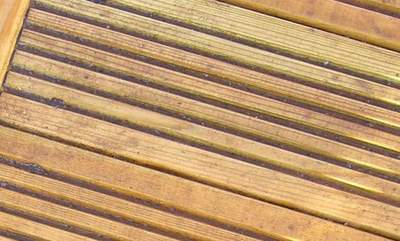
Building a wooden patio deck can be a very attractive solution as they are generally less expensive and easier to construct than patios made from other materials. They blend in well with the rest of your garden and allow a lot of design flexibility.
They are also a good solution to the problem of a very sloping site. Rather than moving quantities of earth to create a level surface and building retaining walls, you can use different lengths of posts to compensate for the different levels and allow your deck to 'float' above the ground.
Patio decks can become very slippery so use purpose made decking boards with a grooved surface to give a better grip.
Advantages of Wooden Decking
- Moderately priced, depending on the complexity of your design.
- Can be used to easily create multi-level patios.
- Looks attractive.
- Easier to install than many other materials.
Disadvantages of Wooden Decking
- Not as long lasting as brick or stone.
- Requires regular maintenance to keep it looking good and in a safe condition.
Cost Saving Options
Look out for sales your local DIY store.
Gravel Patio Flooring
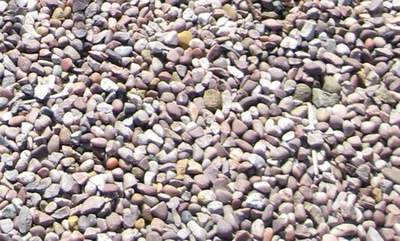
A simple gravel patio can be constructed very easily and inexpensively. Either use the gravel on its own (use edging boards to keep it in place) or combine it with other materials, such as brick or stone, or even panels of wooden decking, to create an interesting effect.
To prevent the gravel being trodden into the underlying soil use a layer of geotextile material or landscaping fabric underneath.
Advantages of Gravel
- Relatively inexpensive.
- Quick and easy to lay - you can create a gravel patio in a weekend.
- It is easy to create curves and other irregular shapes.
Disadvantages of Gravel
- Tends to find its way on to your lawn or to be walked into the house.
- Needs frequent raking to keep it looking neat and tidy.
- Can be difficult to walk on.
Cost Saving Options
You'll probably need more than you think so save money by buying in bulk.
Related Pages
You will find more tips on planning a patio at patio ideas and, if you are thinking about building your own patio, you will find useful information at how to build a patio.
Home › Patio ideas › Choosing patio flooring

Recent Articles


-
Best Climbers For Sandy Soil
Feb 27, 14 07:52 AM
Climbers for sandy soil need to be able to cope with free draining conditions and relatively low soil fertility. These are my favourite climbers for sand. -
Best Perennials For Sandy Soil
Feb 26, 14 05:51 AM
The best perennials for sandy soil positively thrive in free draining soils with low fertility. These are my favourite perennials for growing in sandy soil. -
How To Use A Soil pH Test Kit
Jan 08, 14 08:19 AM
 How to use a soil pH test kit to find out if your garden soil is acid, alkaline or neutral. Soil pH kits are cheap, effective, simple to use, and are an indispensable aid to more successful gardening.