Home › Raised bed vegetable garden › Large raised bed vegetable garden plan
Raised Bed Vegetable Gardens
Plan 1: A Large Plot
Designing raised bed vegetable gardens is very straightforward and growing your own fresh produce is enormously rewarding.
The sample plan below allows for enough raised beds to practise a simple 3 year crop rotation whilst still leaving room for separate beds of permanent vegetables, herbs and soft fruit.
Planting each vegetable in blocks rather than rows will maximise your growing space.
You can use the long beds to practise a simple system of crop rotation: root crops in one, brassicas in the next, and the third bed for everything else including legumes and salads.
The following year move everything one bed to the left so that the root crops are replaced by brassicas, the brassicas by the legumes and salads, and the legumes and salads by root crops. Continue in this way in the subsequent years.
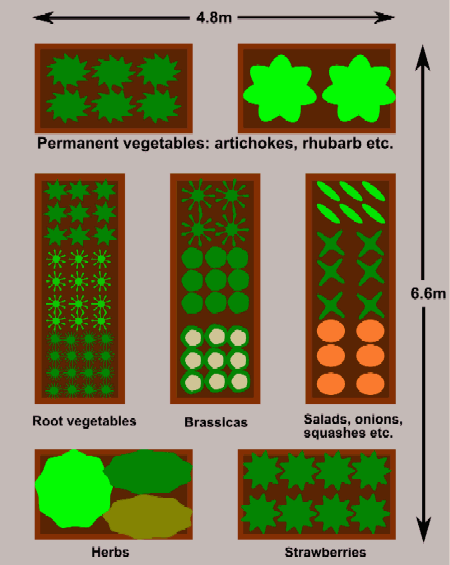
This system keeps your soil healthier by reducing the potential build up of pests and diseases and, importantly, also allows you to give each type of crop the growing conditions it prefers.
In autumn incorporate bulky organic matter into the bed that will grow legumes and salads and three weeks before sowing apply a general fertilizer.
For the root crops apply a general fertilizer two weeks before sowing.
The brassicas appreciate alkaline soil so if your soil is on the acid side, apply lime to raise the pH and apply a general fertilizer two weeks before planting.
Need More Information?
Links to more information and sample plans for vegetable growing can be found at planning a raised bed vegetable garden.
For information about how to grow vegetables generally, take a look at creating a successful home vegetable garden.
If you are interested in using raised beds in the ornamental garden, you can find links to more information and sample plans at raised bed garden plans for the ornamental garden.
Raised bed gardening provides a handy overview of the subject, whilst successful raised bed garden design offers useful design tips and information.
Home › Raised bed vegetable garden › Large raised bed vegetable garden plan

Recent Articles


-
Best Climbers For Sandy Soil
Feb 27, 14 07:52 AM
Climbers for sandy soil need to be able to cope with free draining conditions and relatively low soil fertility. These are my favourite climbers for sand. -
Best Perennials For Sandy Soil
Feb 26, 14 05:51 AM
The best perennials for sandy soil positively thrive in free draining soils with low fertility. These are my favourite perennials for growing in sandy soil. -
How To Use A Soil pH Test Kit
Jan 08, 14 08:19 AM
 How to use a soil pH test kit to find out if your garden soil is acid, alkaline or neutral. Soil pH kits are cheap, effective, simple to use, and are an indispensable aid to more successful gardening.