Home › Plant guides › Plants for dry shade
Home › Gardening in the shade › Plants for dry shade
Plants for Dry Shade
Perennials and Ferns
There's no doubt that choosing plants for dry shade can be a bit of a problem
The dry shaded areas in the lee of buildings and walls and under dense tree cover are inhospitable to many plants and present a real challenge to any gardener.
However, there are plants that will grow in these conditions and I've picked out some favourite perennials and ferns that are definitely worth a try.
I hope there is something to please everyone, from the imposing Acanthus, through the rather luscious and deliciously named Treacle Berry, down to the tiny but perfectly formed Labrador Violet.
Not forgetting, of course, those garden stalwarts, the leathery-leaved Bergenia, the tough Geranium macrorrhizum and the Lily Turf.
All the ferns I've chosen are common in the wild but please don't let that stop you from adding them to your dry shade mix to lend both height and elegance.
For the very best chance of success, prepare your planting site in dry shade by digging in plenty of well rotted organic matter to improve soil structure and help water retention.
After planting, apply a liberal mulch of good garden compost and do make a point of watering your plants until they are well established.
Perennials for Dry Shade
Acanthus mollis (Bear's Breeches)
- Form: perennial
- Foliage: semi-evergreen
- Hardiness: UK - fully hardy; USDA zones 7 to 10
- Soil: tolerates a wide range of soils, dislikes excessive wet
- Situation: sun or light to partial shade
- Height: 1.5m (5ft)
- Spread: 90cm (3ft)
Reasons to grow: A bold, stately, upright perennial that looks good throughout most of the year. Large, deeply cut shiny leaves and tall spikes of white and mauve flowers in the summer make this a really imposing plant for dry shade.
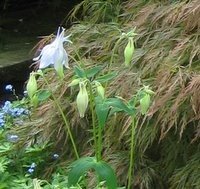
Aquilegia vulgaris 'Nivea' (Columbine, Granny's Bonnet)
- Form: perennial
- Foliage: deciduous
- Hardiness: UK - fully hardy; USDA zones 3 to 9
- Soil: any moist but well drained fertile soil, will tolerate drier conditions
- Situation: sun or partial shade
- Height: 90cm (36in)
- Spread: 45cm (18in)
- Awards: RHS AGM
Reasons to grow: A graceful upright perennial forming clumps of attractive grey green foliage divided into lobed leaflets. Clusters of pure white, bell-shaped spurred flowers are carried in late spring and early summer and appear almost luminous in a shady situation.
Also consider: Any of the many variants of this species make great plants for dry shade. 'Nora Barlow' has fully double pink flowers tinged with green.
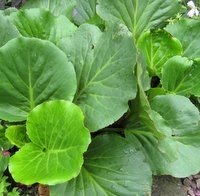
Bergenia cordifolia (Elephant Ears)
- Form: perennial
- Foliage: evergreen
- Hardiness: UK - fully hardy; USDA zones 3 to 8
- Soil: any well drained soil
- Situation: sun or partial shade
- Height: 45cm (18in)
- Spread: 60cm (24in)
Reasons to grow: A really good choice for architectural ground cover, these excellent plants for dry shade are grown mainly for their clumps of large, rounded leathery leaves (hence the name Elephant Ears) which redden in autumn and winter. Sturdy spikes of cup-shaped pink flowers appear in spring.
Also consider: B. cordifolia 'Purpurea' for deep green leaves which flush purple in autumn and winter.
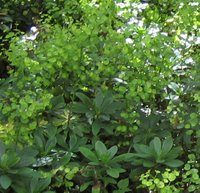
Euphorbia amygdaloides var. robbiae (Mrs Robb's Bonnet, Wood Spurge)
- Form: spreading perennial
- Foliage: evergreen
- Hardiness: UK - fully hardy; USDA zones 5 to 7
- Soil: any well drained soil
- Situation: sun or shade
- Height: 75cm (30in)
- Spread: 30cm (12in)
- Awards: RHS AGM
Reasons to grow: Really useful evergreen plants for dry shade. Bright yellow green heads of flowers appear in spring above basal rosettes of long dark green leaves.
Also consider: Euphorbia amygdaloides 'Purpurea' which has year round rich purple foliage and stems with contrasting lime green flowerheads in spring and summer. It prefers moist soil but will tolerate dry shade.
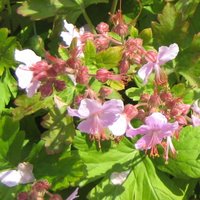
Geranium macrorrhizum 'Ingwersen's Variety'
- Form: rhizomatous perennial
- Foliage: semi evergreen
- Hardiness: UK - fully hardy; USDA zones 4 to 8
- Soil: any soil, moist to well drained
- Situation: sun or shade
- Height: 40cm (16in)
- Spread: 1m (40in)
- Awards: RHS AGM
Reasons to grow: A hard working plant that grows in a range of conditions including dry shade. The deeply lobed leaves are aromatic and turn orangey red in autumn. The light pink flowers with contrasting deep pink calyces are borne in early summer.
Remove old leaves and spent flowers to encourage new growth.
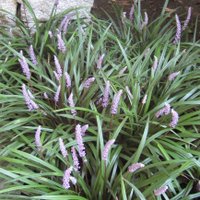
Liriope muscari (Big Blue Lily-turf)
- Form: perennial
- Foliage: evergreen
- Hardiness: UK - hardy; USDA zones 6 to 10
- Soil: well-drained, neutral to acid soil
- Situation: partial to full shade, but will tolerate a sunnier spot if the soil is reliably moist.
- Height: 30cm (12in)
- Spread: 45cm (18in)
- Awards: RHS AGM
Reasons to grow: This useful plant is also good for acidic soil conditions. From August to November, as other flowers are beginning to fade, spikes of deep violet flowers rise above the dense strap-like foliage. Copes brilliantly with difficult conditions including dry shade and drought and makes excellent groundcover.
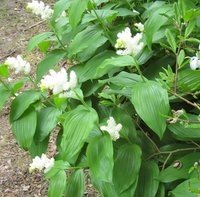
Smilacina racemosa (False Spikenard, Treacle Berry)
- Form: herbaceous perennial
- Foliage: deciduous
- Hardiness: UK - fully hardy; USDA zones 4 to 9
- Soil: any neutral to acid soil
- Situation: sun or shade
- Height: 90cm (36in)
- Spread: 30cm (12in)
- Awards: RHS AGM
Reasons to grow: A bit of a showstopper with dense, foamy spikes of fragrant creamy flowers borne in mid to late spring above the lush lance shaped foliage. It tolerates a wide range of conditions and actually thrives in dry shade.
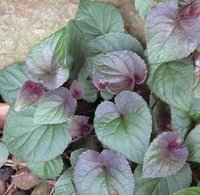
Viola labradorica 'Purpurea' (Labrador Violet)
- Form: perennial
- Foliage: semi-evergreen
- Hardiness: UK - fully hardy; USDA zones 3 to 8
- Soil: prefers well drained neutral to acid soil but will tolerate some alkalinity
- Situation: prefers light to partial shade but tolerates sun and full shade
- Height: 15cm (6in)
- Spread: indefinite
Reasons to grow: Also known as Viola riviniana 'Purpurea', these delightful little plants for dry shade form low mounds of perfect, heart-shaped leaves, purple bronze when young. Tiny purple flowers appear in spring and summer.
This is a very useful groundcover plant for difficult sites (such as dry shade!). In my own garden it has colonized a particularly inhospitable area beneath a conifer hedge.
It self seeds freely and can become invasive although any unwanted seedlings are easily removed.
Ferns for Dry Shade
Ferns are really useful plants for dry shade as they create a sense of moist lushness in what can be a rather barren environment.
Many ferns are plants of moist woodland, rich in leaf litter, so take the time to prepare the planting site well by digging in plenty of well rotted organic matter and providing a mulch of good compost or leaf mould.
If you provide a little extra care whilst your plants are young they will rapidly become established and well able to cope with the dry conditions.
The ferns below are very common in the wild and may be so familiar a sight that you would not consider planting them deliberately - but don't let this put you off as they can add a whole new dimension to your planting.
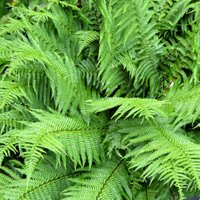
Dryopteris filix-mas (Male Fern)
- Form: fern
- Foliage: deciduous or semi-evergreen
- Hardiness: UK - fully hardy; USDA zones 4 to 8
- Soil: prefers moist humus rich soil but will tolerate drier conditions once established
- Situation: sun or shade
- Height: 1.2m (4ft)
- Spread: 1m (3ft)
- Awards: RHS AGM
Reasons to grow: The tall elegant fronds are invaluable for adding height and structure to a dry, shady border and creating a sense of lushness. Provide extra water until plants are well established.
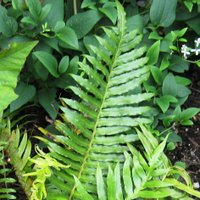
Polystichum munitum (Western Sword Fern)
- Form: fern
- Foliage: evergreen
- Hardiness: UK - fully hardy; USDA zones 4 to 9
- Soil: well drained humus rich soil
- Situation: prefers light to partial shade but can tolerate sun to full shade
- Height: 1.2m (4ft)
- Spread: 30cm (1ft)
- Awards: RHS AGM
Reasons to grow: A native of western North America, this tall imposing fern forms arching clumps of dark green leathery fronds and looks good both as a specimen plant or grown en masse.
It is one of the most useful plants for dry shade as it is evergreen and provides structure and architectural interest throughout the year. Remove any dead fronds in spring before new growth begins.
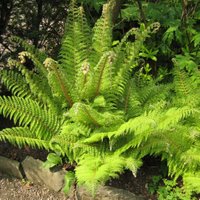
Polystichum setiferum (Soft Shield Fern)
- Form: fern
- Foliage: evergreen
- Hardiness: UK - fully hardy; USDA zones 5 to 8
- Soil: any well drained, fertile, humus rich soil
- Situation: full or partial shade
- Height: 1.2m (4ft)
- Spread: 1m (3.3ft)
- Awards: RHS AGM
Reasons to grow: This is one of my favourite ferns and appears in my list of plants for deep shade but it is so useful that I'm not going to apologize for including it here as well!
The tall, finely divided fronds make this handsome plant a real winner, adding year round architectural interest and structure to your garden. The feel of the soft fronds also adds tactile appeal.
Also consider: Any of the many named forms of P. setiferum are suitable. The Hard Shield Fern, P. aculeatum also tolerates dry shade.
Related Pages
Perennials and ferns for partial shade.
Perennials and ferns for deep shade.
Evergreen shade tolerant trees.
Deciduous shade tolerant trees.
Gardening in the shade gives an overview of the subject and an explanation of how to identify the different degrees of shade.
Links to other 'plants for places' pages can be found at plant guides.Home › Plant guides › Plants for dry shade
Home › Gardening in the shade › Plants for dry shade

Recent Articles


-
Best Climbers For Sandy Soil
Feb 27, 14 07:52 AM
Climbers for sandy soil need to be able to cope with free draining conditions and relatively low soil fertility. These are my favourite climbers for sand. -
Best Perennials For Sandy Soil
Feb 26, 14 05:51 AM
The best perennials for sandy soil positively thrive in free draining soils with low fertility. These are my favourite perennials for growing in sandy soil. -
How To Use A Soil pH Test Kit
Jan 08, 14 08:19 AM
 How to use a soil pH test kit to find out if your garden soil is acid, alkaline or neutral. Soil pH kits are cheap, effective, simple to use, and are an indispensable aid to more successful gardening.